
April 17, 2026
Painting an Exterior Door That Holds Up to Full Sun, Humidity, and Daily Use
A front door absorbs heat, swings through humidity swings, and gets touched every day. Those three forces are why door paint fails first.
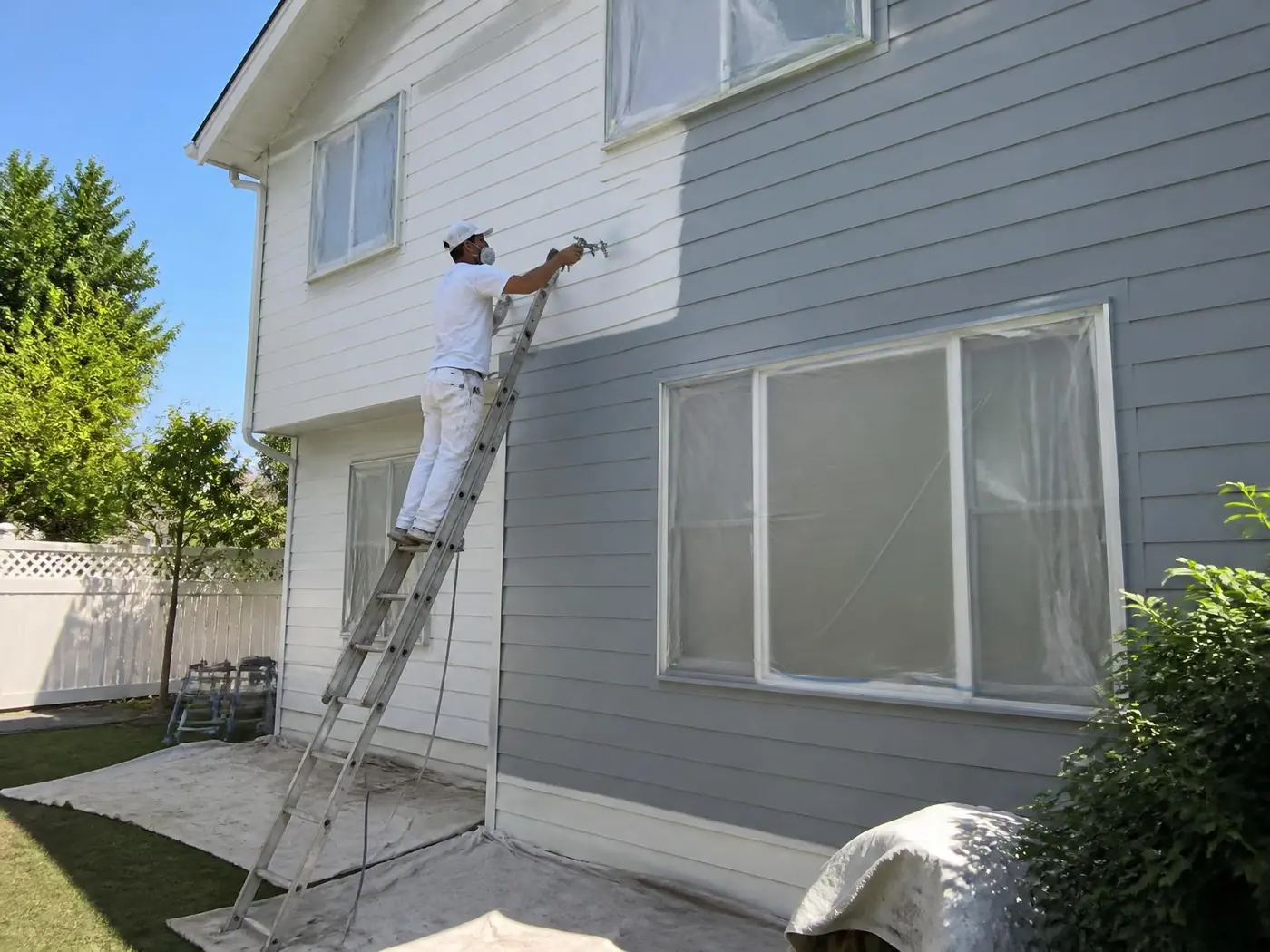
Front doors in the Lake Norman area fail their paint faster than almost any other surface on a residential exterior, and the reasons go well beyond the obvious ones. It is not simply that the door is exposed. It is that a door is a thin panel that heats and cools rapidly, moves with humidity, and gets physically handled every single day.
Getting a door finish to last means treating it as its own project rather than as one more surface on the house.
Why doors fail first
- Thermal load. A dark door in direct afternoon sun can reach surface temperatures far above ambient air, which softens paint and accelerates binder breakdown.
- Dimensional movement. Wood doors swell and shrink with humidity. Paint that is not flexible enough cracks along the panel joints.
- Constant contact. Hands, keys, dogs, deliveries, and storm doors all abrade the finish at the same height every day.
- Trapped heat. A storm door in front of a painted door creates an oven effect that is one of the most common causes of blistering we see.
Material changes the approach
Fiberglass doors are the most forgiving. They do not move much, and they accept high-quality acrylic and urethane-modified coatings well as long as they are properly cleaned and scuff sanded.
Steel doors need attention to any rust before coating and benefit from a bonding primer. Once rust starts under a film it will keep spreading.
Wood doors demand the most. Every edge, including the top and bottom edges nobody sees, needs to be sealed. An unsealed top edge is how moisture gets into a wood door and pushes the paint off the face panels from behind.
Color matters more than people expect
Deep, saturated colors are the most popular choice for front doors and also the hardest working. Black, deep navy, and charcoal absorb the most solar energy and run the hottest. On a west facing door with no porch cover, that heat load is significant.
This does not mean you cannot have a dark door. It means the product selection has to account for it. Several manufacturers make coatings specifically engineered for heat-absorbing exterior surfaces, and those are the right choice for a dark door in full sun rather than standard exterior trim enamel.
The process that makes it last
- Remove the door and lay it flat when possible. Gravity is the enemy of a smooth vertical finish on a paneled surface.
- Remove hardware rather than taping around it.
- Clean thoroughly to remove hand oils, then scuff sand the entire surface.
- Prime bare, repaired, or rusted areas with the appropriate primer for the substrate.
- Seal all six sides on a wood door, including the top and bottom edges.
- Apply two thin coats rather than one heavy one, following the panel sequence: recessed panels first, then rails, then stiles.
- Let it cure before rehanging. A door closed against a soft finish will stick to the weatherstripping and pull the paint off.
Maintenance that doubles the lifespan
Wash the door twice a year with mild soap and water to remove hand oils and pollen. Recaulk the perimeter trim when you see gaps. If the door is under a storm door, prop the storm door open on the hottest days if you can.
Catch chips early. A chip in a door finish exposes the substrate directly to moisture, and on a wood door that turns into a much larger repair within a season.
Common questions
Frequently asked
What kind of paint should I use on a front door?+
A premium exterior acrylic or urethane-modified enamel rated for doors and trim. For dark colors in full sun, use a product specifically formulated for heat-absorbing exterior surfaces.
Should I take the door off to paint it?+
When practical, yes. Painting a door flat gives a smoother finish with fewer runs, and it lets you seal the top and bottom edges, which is where moisture usually gets in.
Why is my front door paint blistering?+
Usually heat, moisture behind the film, or both. A storm door trapping heat against a dark door is the most common cause we see in this area.
How long before I can close a freshly painted door?+
Wait at least 24 hours, and longer in humid weather. Closing it too soon lets the soft finish bond to the weatherstripping.
Next steps
Want it done right the first time?
Trailblaze Paints serves Mooresville, Cornelius, Davidson, Huntersville, Denver, and the wider Lake Norman area. Free quotes, insured crews, written warranty.