What Order Should You Paint a Room in a Lake Norman Home? Why the Sequence Changes Everything
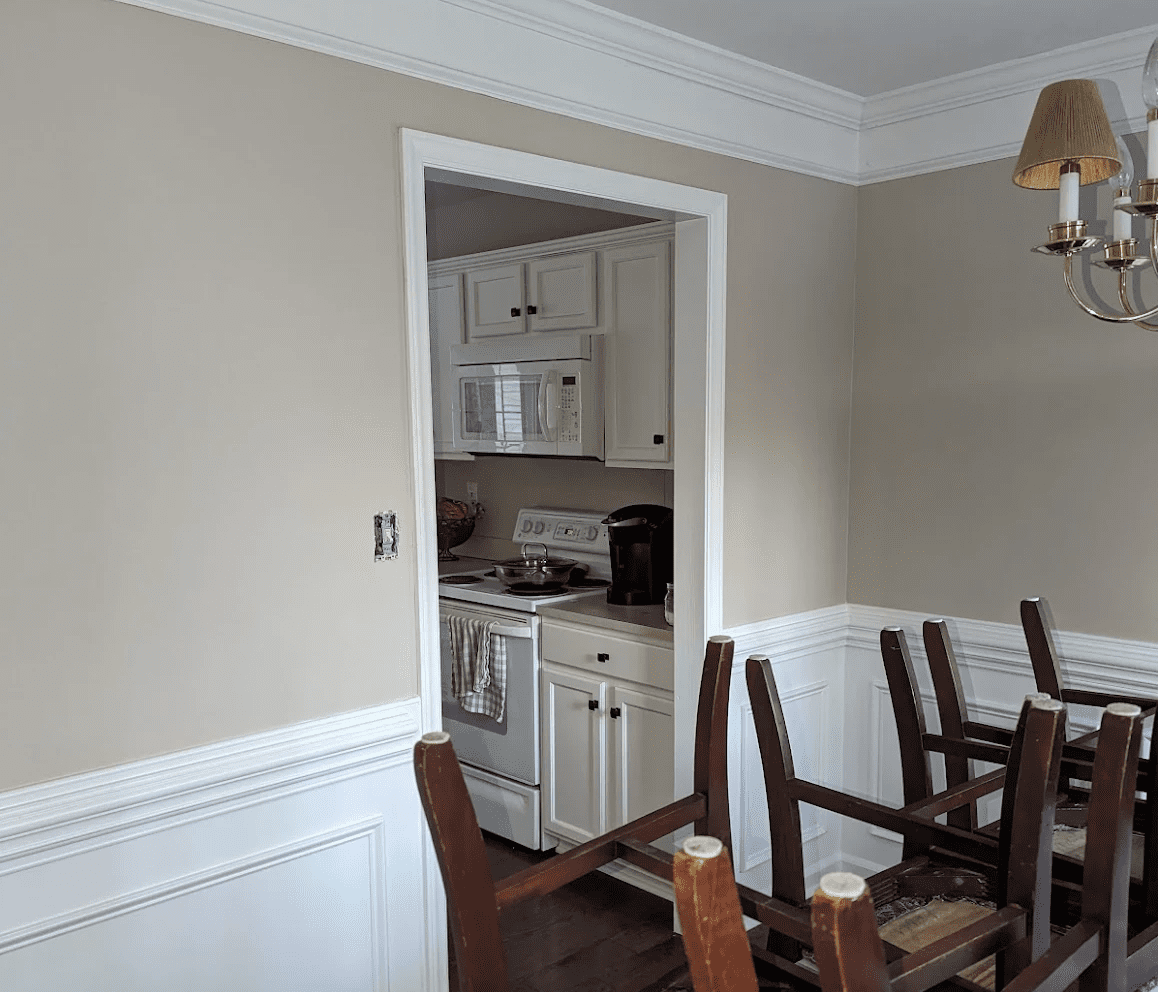
Most interior painting mistakes don’t start with the wrong color or the wrong product. They start with the wrong sequence. A homeowner begins with the surface they’re most excited about — often the walls — and by the time the project is finished, there is ceiling paint on the freshly rolled wall edge, trim paint on the baseboard that dripped onto the floor, and a series of touch-up sessions that add hours and leave subtle variations in sheen and texture that are visible every time the afternoon light comes through the window.
The professional painting sequence is not a set of arbitrary rules. Every step falls where it does for a specific reason, and understanding those reasons transforms the sequence from a checklist you follow into a logic you can apply to whatever your specific room presents. In Mooresville, Cornelius, Davidson, Denver, Sherrills Ford, and across the Lake Norman area — where homes range from craftsman bungalows with complex millwork profiles to newer builds with tall vaulted ceilings and open floor plans — the sequence needs to be understood deeply enough to adapt to the specific conditions of each room rather than applied mechanically regardless of what the walls and ceiling are telling you.
The Governing Principle That Makes Every Other Decision Make Sense
Before getting into the specific steps, there is one principle that generates the entire sequence: work from top to bottom, and from rough to refined. These two sub-principles work together and explain almost every sequencing decision professional painters make.
Working top to bottom is gravitational logic. Paint drips, overspray, and the fine mist generated by roller application all travel downward. When you work from the highest surface to the lowest, any material that falls from the surface you’re currently working on lands on something you haven’t painted yet. It gets covered by subsequent work automatically. When you reverse the sequence — painting floors or trim before walls, painting walls before ceilings — every drip and every mist particle from subsequent work above lands on a finished surface and requires cleanup or touch-up that introduces sheen variation and texture inconsistency at every corrected point.
Working from rough to refined means painting surfaces that can tolerate some overspray from adjacent work before painting surfaces that require precision and clean edges. Ceilings can accept a small amount of wall paint at their perimeter because that perimeter will be covered when the wall is painted. Walls can accept trim drips at the baseboard because the baseboard coat covers that contact zone. When the sequence runs in the right direction, it is self-correcting. When it runs in reverse, each step creates problems for the previous one.
Before Any Paint Opens: The Preparation Phase That Determines Everything
The sequence doesn’t begin with a brush or a roller. It begins with preparation, and preparation done across every surface simultaneously — before any paint is opened — is dramatically more efficient than prepping each surface just before painting it. Walking through the room and addressing all repairs, all cleaning, and all masking in a single pass means you never have to stop mid-project to go back and prep something you should have handled earlier.
In Lake Norman homes, the preparation phase includes a few specific considerations that homeowners in milder climates don’t face as directly. North Carolina’s combination of high summer humidity and dramatic seasonal temperature swings creates ideal conditions for hairline drywall cracking at corners, particularly in homes where the foundation has any seasonal movement. These cracks need to be addressed with joint compound and feathered flat during the prep phase, not discovered after the first coat of paint reveals them under raking light. Any water staining on ceilings from previous roof events or plumbing leaks also needs to be identified during prep and flagged for shellac primer treatment before ceiling paint goes on — because latex primer over a water stain produces a stain that migrates back through the fresh coat within weeks.
Surface cleaning is part of preparation, not an afterthought. Walls in Lake Norman homes adjacent to kitchens or outdoor living spaces accumulate a thin film of cooking grease and pollen-laden dust that is effectively invisible to the naked eye but is present at a molecular level and will prevent proper paint adhesion in those areas. A wipe-down with a mild degreasing solution before any paint is applied is the step that prevents the subtle adhesion failures that show up as dull patches in specific areas six months after a project is complete.
Step One: Ceiling First, Every Time
With preparation complete across every surface, the ceiling receives the first coat of finish paint — not because it’s the most important surface but because it is the highest, and therefore the one whose overspray and drips will fall onto everything below it. Rolling a ceiling generates fine mist that settles on every horizontal and near-horizontal surface within several feet. If the walls have already been painted when the ceiling coat goes on, that mist creates a sheen variation on the upper wall surface that requires careful touch-up. If the walls haven’t been painted yet, it’s irrelevant — it gets covered.
In Lake Norman homes with vaulted or cathedral ceilings — common in the area’s newer construction in Cornelius and Davidson — ceiling work requires extension poles and in some cases scaffolding for sections that extend beyond standard reach. The physics of painting at height on an extension pole change how much pressure you can apply and how consistently the roller deposits paint. Working in overlapping passes, maintaining a consistent speed and pressure throughout each pass, and cutting in the perimeter before rolling prevents the banding and uneven coverage that large ceiling planes reveal under the broad light distribution of vaulted spaces.
One North Carolina-specific note about ceiling timing: in summer months when outdoor humidity in the Lake Norman area is high and homes are running air conditioning, interior humidity can vary significantly between rooms depending on proximity to vents and the efficiency of the HVAC system. Ceilings in poorly ventilated spaces or rooms where air circulation is limited can take longer to dry to recoat condition than the paint manufacturer’s specified window, which was calibrated for moderate conditions. Checking the surface — a light touch that shouldn’t feel cool or tacky — before applying a second ceiling coat prevents the adhesion issues that result from coating over insufficiently dried paint.
Step Two: Walls — The Technique Decisions That Prevent the Most Common Problems
After the ceiling is complete and dry, walls receive their first coat. The cut-in at the ceiling line, at every vertical corner where walls meet, and along the top edge of baseboards and casings should be done in relatively narrow bands — two to three inches — rather than attempting to brush in the entire wall height before picking up the roller. Wide cut-in bands dry before the roller can work back into them, and that dry edge creates a visible seam between brush-applied and roller-applied paint that shows under raking light as a subtle sheen and texture difference.
In Lake Norman homes during humid summer months, the timing between cut-in and rolling is more compressed than it is in drier climates. The same humidity that slows ceiling drying also slows wall drying, but the critical issue at this stage is the opposite: if indoor conditions are very dry due to aggressive air conditioning, wall paint can skin over on the roller and at cut-in edges faster than in humid conditions, reducing the working window for maintaining a wet edge and creating lap marks along the roller’s travel path. This is the seasonal flip that North Carolina painters navigate — adjusting working pace and section size based on whether the indoor condition is running humid or dry on the specific day of the project.
Rolling walls from ceiling to floor in overlapping passes, using a nap thickness appropriate to the wall texture, and moving promptly from cut-in to rolling in each section before the cut-in edge skins over produces the first coat. The second coat follows the same sequence. Coverage evaluation should always happen on fully dry paint — wet paint reads thinner and more transparent than it will once cured, and assessing wet paint produces the anxiety that leads to unnecessary additional coats.
Step Three: Trim Last — the Decision That Separates Professional Results From Amateur Ones
Painting trim after walls is the step that most homeowners instinctively reverse, and the reason for the reversal is understandable: the idea of painting crisp white trim edges against a finished wall feels precise and deliberate, like drawing a clean line. The problem is that applying paint to a baseboard or door casing requires brush pressure at edges that inevitably pushes small amounts of trim paint onto the adjacent wall surface. If the wall is already painted and that semi-gloss trim paint lands on an eggshell finish, the sheen difference at that contact point is visible under the directional afternoon light that Lake Norman homes receive through their generous glazing.
When trim is painted last, the same contact occurs — a small amount of semi-gloss at the wall edge — and is corrected by touching that point with a small amount of wall paint on a brush once the trim has dried. The eggshell correction blends invisibly into the surrounding wall because it is the same product over the same product with no sheen differential. The math strongly favors trim last in every situation.
Within trim, the top-to-bottom principle applies internally. Crown molding or ceiling trim comes first if present, then door and window casings, then baseboards. Drips from crown work fall onto casings and baseboards not yet painted. Drips from casings fall onto baseboards below them. The sequence is self-cleaning at every level.
Doors and Hardware: The Final Details That Complete the Sequence
Interior doors, if being painted as part of the project, follow the trim sequence and come after baseboards. Remove all hardware before painting — hinges, knobs, strike plates — rather than attempting to cut around them, which never produces a result as clean as the one achieved by simply removing the hardware and replacing it after the paint has dried.
Paint door faces in thin, even coats using the same trim enamel used on the rest of the trim for a consistent sheen match. Prop doors open during drying and for at least twenty-four hours after the final coat to prevent the freshly painted door surface from bonding to the freshly painted door frame at their contact points — a small detail that prevents a frustrating and surprisingly common damage event when the door is closed for the first time after a paint project.
Let Trailblaze Paints Execute Every Step the Right Way
A room painted in the correct sequence looks different from one that was painted in whatever order seemed convenient — cleaner lines, more consistent sheen, no touch-up patches announcing themselves under window light. At Trailblaze Paints, we run every interior project throughout Mooresville, Cornelius, Davidson, Denver, Sherrills Ford, and the Lake Norman area with this sequence built into the work from day one, because we’ve seen what skipping steps or reversing the order costs in time, material, and the quality of the finished result. If you’re ready to have an interior room or an entire home painted by a crew that gets the sequence right along with everything else, reach out to our team today to get your free quote — and let’s deliver a finish that looks right from every angle and in every light condition your home produces.