
February 6, 2026
How to Paint Ceilings Without Streaks, Spatter, or Lap Marks
Ceilings punish hesitation. Everything about doing them well comes down to keeping a wet edge and never going back over paint that has begun to set.
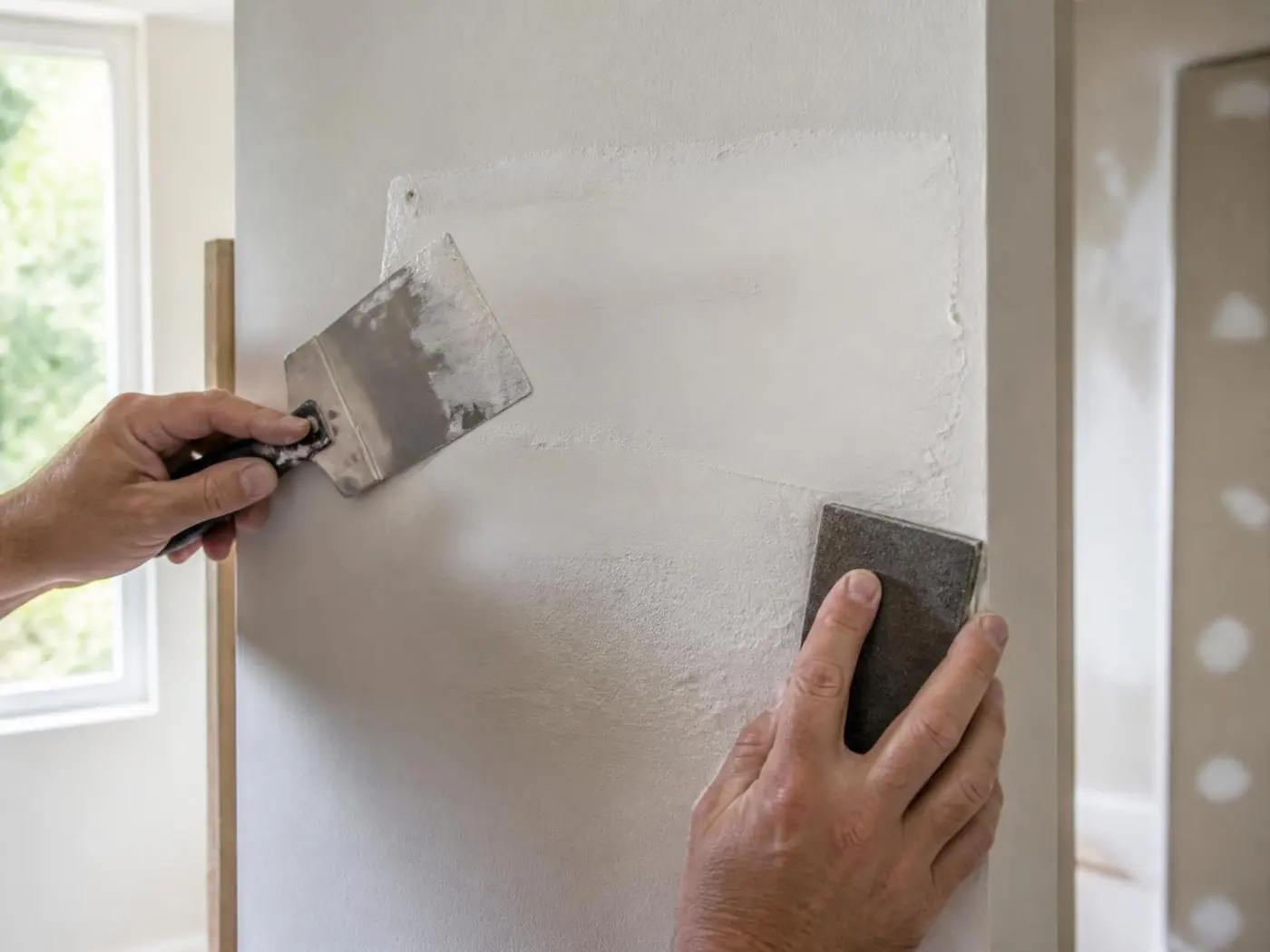
A ceiling is the largest uninterrupted surface in most rooms, and it is lit almost entirely by raking light from windows and fixtures. That combination means every lap mark, every missed strip, and every roller line shows up plainly.
The good news is that ceilings are technically simple. There is no trim to cut around, no color transitions, and no sheen decisions. Nearly all of the difficulty is in pacing.
Use actual ceiling paint
Ceiling paint is not a marketing category. It is formulated thicker than wall paint so it spatters less and clings better overhead, and it is almost always dead flat so it hides the imperfections that raking light exposes. Many ceiling paints also go on tinted pink or blue and dry white, which makes it far easier to see where you have already rolled.
Never use an eggshell or satin on a ceiling unless you are deliberately going for a sheen. Any gloss at all will highlight every drywall seam and every roller stipple variation in the room.
Setup that saves the job
- Cover the floor completely. Ceiling work drips, always.
- Remove or loosen light fixture canopies and ceiling fan mounts rather than trying to cut around them.
- Use an extension pole rather than a ladder for the field. It is faster, safer, and produces more consistent pressure.
- Set up strong side lighting so you can see the wet edge as you work.
- Choose the right nap: 3/8 inch for smooth ceilings, 1/2 to 3/4 inch for lightly textured, 3/4 inch or more for popcorn.
The technique
Cut in the perimeter with a brush, but only two or three feet ahead of where you are rolling. Cutting in the entire room first guarantees the brushed edge will be dry before the roller reaches it, and that produces a visible picture frame around the whole ceiling.
Roll in strips across the short dimension of the room, overlapping each pass by about a third. Work away from your light source so the wet edge stays visible. Finish each strip and immediately start the next while the previous one is still wet. Do not stop in the middle of a ceiling for a phone call.
Textured and popcorn ceilings
Popcorn texture is water soluble on many older homes, which means rolling can pull it right off the drywall. Test a small area first. If the texture starts releasing, the ceiling needs to be sprayed rather than rolled, and it may need to be sealed first.
Textured ceilings also drink far more paint than smooth ones. Expect coverage per gallon to drop by a third or more, and load the roller heavily rather than pressing hard, which crushes the texture.
Stains, water marks, and yellowing
Do not paint over a water stain with ceiling paint and hope. Tannins and water-soluble stains bleed straight through latex, sometimes within hours. Seal the stain with a stain-blocking primer first, let it dry, then paint the entire ceiling so the sheen stays uniform.
If the ceiling is yellowed from age, smoke, or a kitchen nearby, wash it before painting. Paint applied over a greasy film will not bond properly no matter how good the product is.
When to hand it off
Ceilings above about ten feet, vaulted great rooms, and two-story foyers are where most homeowner ceiling projects go wrong, not because the technique changes but because staging safely at that height is genuinely difficult. Those are worth handing to a crew with the right equipment and the insurance to back it.
Common questions
Frequently asked
Do you need to prime a ceiling before painting?+
Not if it is previously painted, clean, and in good shape. Prime bare drywall, any patched areas, and any stain before applying ceiling paint.
Which direction should you roll a ceiling?+
Roll in strips across the short dimension of the room and work away from your main light source, overlapping each pass by about a third while it is still wet.
Can you paint over a popcorn ceiling?+
Sometimes, but the texture can release when rolled. Test a small area first. If it starts coming off, the ceiling should be sprayed rather than rolled.
Next steps
Want it done right the first time?
Trailblaze Paints serves Mooresville, Cornelius, Davidson, Huntersville, Denver, and the wider Lake Norman area. Free quotes, insured crews, written warranty.