
January 15, 2026
How to Choose the Best Exterior Trim Boards
Trim is where exterior paint fails first, and the material you choose determines how often you will be repainting it.
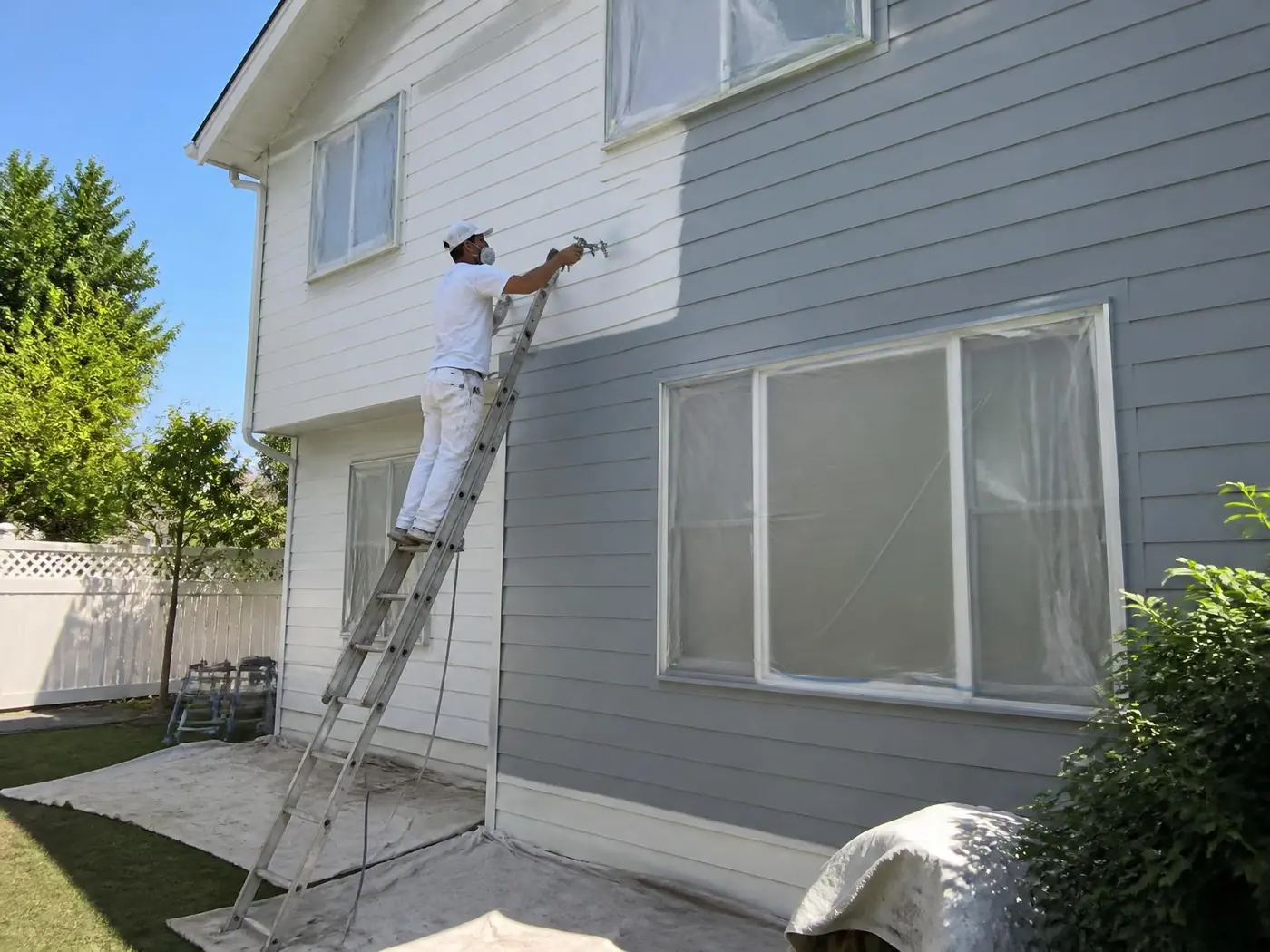
Exterior trim does the hardest job on a house. It sits at every edge, every joint, and every transition, which is exactly where water tries to get in. It is also the most visible detail on an elevation, so when trim paint fails, the whole house looks tired.
If you are replacing rotted trim or building new, the material decision matters as much as the paint that goes on it. Here is how the main options behave in our climate.
PVC and cellular composite trim
PVC trim does not rot, does not absorb water, and is not food for insects. In a humid lakeside climate, those are significant advantages, particularly on the lowest boards, around window sills, and anywhere close to the ground.
The tradeoffs are real, though. PVC expands and contracts with temperature far more than wood, so it needs proper fastening and expansion gaps or the joints will open. It also cannot be painted a dark color unless you use a coating rated for vinyl and PVC, because heat buildup will warp it.
- Best for: ground-contact trim, sills, and any area with chronic moisture.
- Painting notes: clean with a solvent wipe, use a bonding primer, and stay with light-reflective colors unless the product allows otherwise.
Fiber cement trim
Fiber cement trim is dimensionally stable, fire resistant, insect proof, and it holds paint exceptionally well. On homes that already have fiber cement siding, matching trim is usually the most consistent choice.
It is heavy, it needs proper cutting practices, and all cut edges must be sealed and primed. An unsealed cut edge is a wick, and it is the most common failure point we find on fiber cement installations.
- Best for: matching Hardie siding, long paint life, low maintenance.
- Painting notes: factory primed boards still need cut edges primed on site. Use a 100 percent acrylic exterior finish.
Wood trim
Real wood still looks better than anything else, especially on traditional and craftsman homes where profile detail matters. Cedar and redwood have natural rot resistance; pine and fir do not and should not be used in exposed locations without full sealing.
Wood requires the most maintenance, but wood that is properly back-primed, sealed on all six sides, kept caulked, and repainted on schedule can last decades. The failures we see are nearly always installation failures rather than material failures.
- Best for: historic accuracy, detailed profiles, and homes where appearance leads.
- Painting notes: prime all six sides before installation, use a stain-blocking primer on cedar and redwood to stop tannin bleed.
Composite and engineered wood trim
Engineered wood trim splits the difference: it looks like wood, costs less than PVC in many cases, and comes factory primed. It resists rot better than untreated pine but it is still a wood product, so any breach in the coating lets moisture in.
It works well on covered elevations and under generous overhangs. We are more cautious about specifying it for exposed ground-level trim in this climate.
What matters more than material
- Flashing. Head flashing above trim and windows keeps water out of the joint. No material survives water running behind it.
- Caulk quality and maintenance. Use a high-grade elastomeric sealant and re-inspect annually.
- Sealed cut ends. Every field cut exposes an unprotected edge that must be primed.
- Clearance from grade and roofline. Trim that touches soil, mulch, or roof shingles will fail regardless of what it is made of.
Common questions
Frequently asked
Is PVC trim better than wood?+
For rot resistance and low maintenance, yes. For appearance, profile detail, and dark paint colors, wood or fiber cement is usually the better choice.
Can you paint PVC trim a dark color?+
Only with a coating specifically rated for vinyl and PVC in dark shades. Standard dark paint on PVC causes heat buildup and warping.
Do fiber cement trim boards need to be painted?+
Factory primed boards need a finish coat, and every field-cut edge needs to be primed on site before painting.
Next steps
Want it done right the first time?
Trailblaze Paints serves Mooresville, Cornelius, Davidson, Huntersville, Denver, and the wider Lake Norman area. Free quotes, insured crews, written warranty.