Why Primer Selection Matters More Than the Topcoat on Most Lake Norman Homes
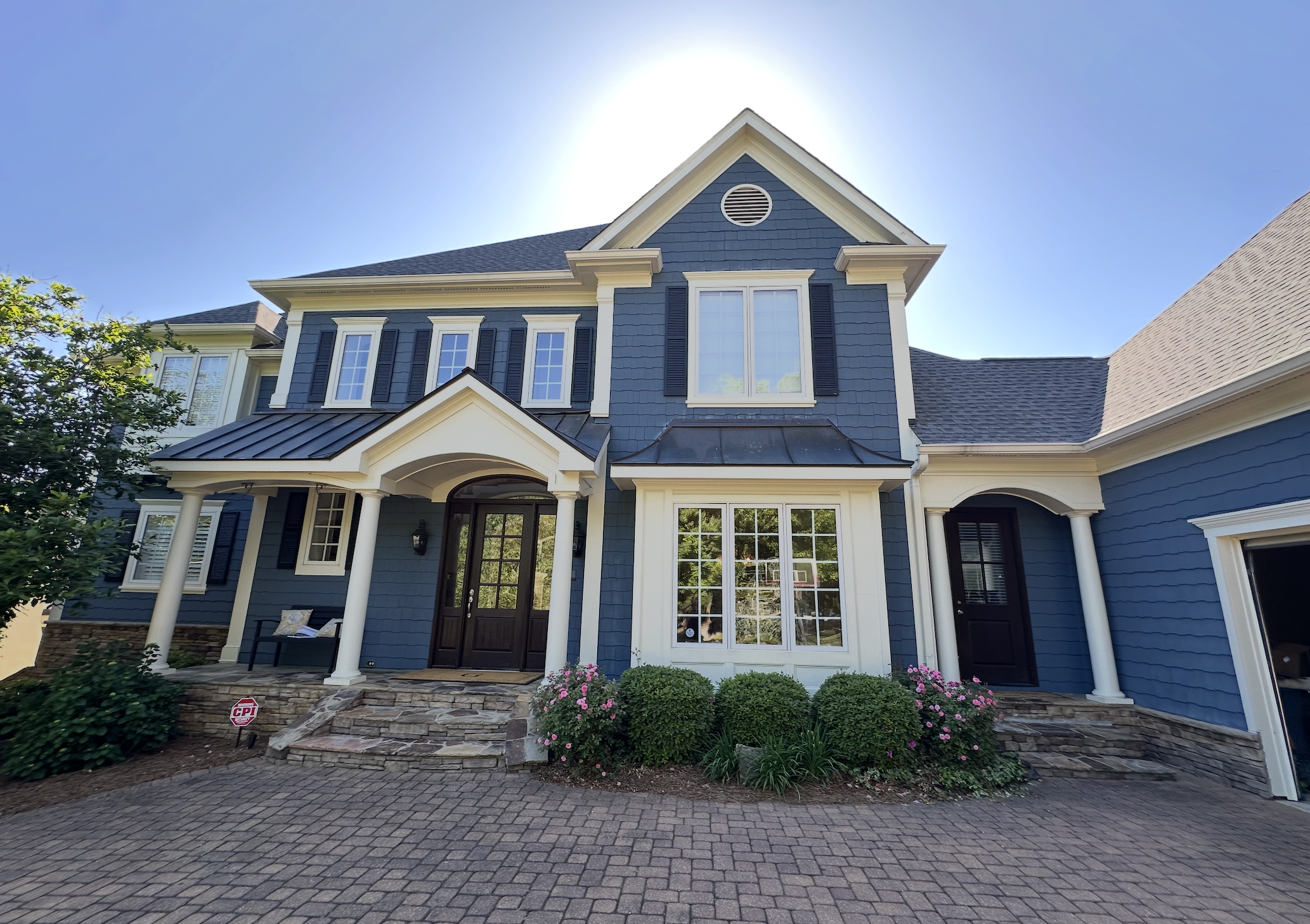
When Lake Norman homeowners start planning an exterior painting project, the conversation almost always gravitates toward paint — the brand, the finish, the color, the sheen. Paint selection feels like the significant decision because it’s the one that’s visible, the one that shows up in the marketing, and the one that carries the most obvious dollar-per-gallon differentiation. What experienced exterior painters know, and what most homeowners don’t discover until they’re evaluating a premature failure years later, is that primer selection determines whether an exterior paint job succeeds or fails far more reliably than topcoat selection does. The best exterior paint in the catalog will fail prematurely on an incorrectly primed surface. A properly selected and applied primer under a mid-grade topcoat will outperform that same topcoat over an inadequate primer by a margin that is not close.
This isn’t a philosophical preference — it’s a structural reality of how paint systems work. Primer is not a preparatory formality or a diluted base coat. It is a chemically distinct product designed to perform functions that topcoats cannot perform and are not formulated to perform. Understanding what those functions are, why they’re substrate-specific, and why the Lake Norman area’s particular climate conditions make primer selection especially consequential gives homeowners a framework for evaluating what contractors are actually specifying — and why the difference between a right choice and a wrong one shows up years before the paint color does.
What Primer Is Actually Doing at the Substrate Level
Topcoats are formulated to perform at the exterior of a paint system — to resist UV degradation, repel moisture, withstand abrasion, and deliver color and sheen stability over time. They are not formulated to penetrate deeply into porous substrates, chemically neutralize alkaline surfaces, bond to substrates that don’t offer adequate mechanical adhesion, or block the migration of water-soluble extractives from wood. Primer is formulated to do exactly those things, which means that the question of which primer to use is inseparable from the question of what substrate it’s going onto.
On bare wood — which includes new trim boards, replacement siding sections, and raw wood on any surface that has been stripped to substrate — primer’s primary job is to penetrate the wood fibers and create a mechanical bond that topcoats can anchor to. Raw wood is highly porous and contains tannins and other extractives that, if not sealed before priming, will migrate into the wet paint film and discolor the topcoat from below. Certain species — Western red cedar and redwood being the most common residential examples — produce particularly aggressive tannin bleed that will telegraph as brown or yellow staining through any number of topcoats applied over an inadequate seal. The correct primer for bare wood is an oil-based or shellac-based product, not a latex primer, because oil and shellac penetrate the wood fibers and seal the extractives in a way that water-based chemistry cannot.
The logic shifts when the substrate is previously painted wood in good condition. Here, the concern is not penetration and extraction sealing but adhesion between the new paint system and the existing film. The primer selection in this case depends on what the existing coating is — whether it’s oil-based or latex, what its current adhesion condition is, and whether any areas have oxidized or become glossy in a way that reduces the mechanical surface energy the new coat needs to grip. Applying a bonding primer over a glossy, intact existing coat is a different product specification than applying a penetrating primer to bare wood, and a contractor who specifies the same product for both is applying the wrong chemistry to at least one of them.
Masonry and Cement Substrates: Where Primer Chemistry Diverges Most Dramatically
Nowhere is primer selection more consequential — or more frequently mishandled — than on masonry and cement-based substrates. Concrete block, stucco, and masonry surfaces are highly alkaline when new or freshly patched, and that alkalinity creates a specific failure mechanism called saponification that most homeowners have never heard of but that is responsible for a significant percentage of premature paint failures on these surfaces.
Saponification occurs when the alkaline salts present in uncured or incompletely cured masonry react with the fatty acid components in certain paint binders — particularly oil-based products — and convert the cured paint film back into a soap-like substance. The result is a paint film that feels soft, loses adhesion, and separates from the substrate in a way that looks like peeling but is actually a chemical breakdown rather than a mechanical failure. Applying an oil-based primer to a fresh stucco surface, or to any masonry that hasn’t been allowed to cure for the recommended period of at least 30 days, creates the exact conditions for saponification to occur.
The correct primer for new or recently repaired masonry is an alkali-resistant formulation — typically a high-quality acrylic latex product specifically labeled for masonry application. These products are formulated to tolerate the alkaline environment without the chemical reaction that destroys oil-based films, and they provide the pore-sealing function necessary to prevent the topcoat from absorbing unevenly into the highly variable porosity of a masonry surface. The importance of pore sealing on masonry cannot be overstated: without it, the topcoat is simultaneously being pulled into high-porosity areas and sitting on the surface of low-porosity areas, producing inconsistent film build, inconsistent sheen, and dramatically uneven moisture resistance across the same wall.
How Lake Norman’s Climate Conditions Amplify the Consequences of the Wrong Primer
Primer selection is consequential in any climate. It is especially consequential in the Mooresville area and across the Lake Norman region because of the specific combination of conditions this climate delivers to exterior paint systems. The piedmont climate here produces humidity levels that regularly exceed 70 percent during the warmer months, sustained rainfall patterns that keep exterior surfaces wet for extended periods, and summer heat that drives the hygroscopic cycling — the repeated absorption and release of moisture — that stresses paint film adhesion more aggressively than almost any other weathering mechanism.
Under these conditions, a primer that doesn’t adequately seal wood extractives will show bleed-through faster than it would in a drier climate, because the repeated moisture exposure mobilizes the tannins and drives them toward the surface more aggressively. A primer that doesn’t fully bond to an existing paint film will delaminate sooner because the thermal expansion and contraction cycles in the Southeast’s wide seasonal temperature range work the adhesion bond continuously. And a primer that doesn’t adequately seal masonry porosity will allow moisture to penetrate and freeze during the region’s cold snaps, creating the hydraulic pressure that causes paint film separation from behind — a failure mode that appears as bubbling and lifting that is visually indistinguishable from moisture-driven topcoat failure but is actually originating at the primer-substrate interface.
Proximity to Lake Norman itself adds another layer. Properties near the water experience higher sustained humidity and greater overnight dew deposition than inland properties at the same elevation. That dew — water that condenses directly onto painted surfaces during the night and evaporates in the morning — represents a daily moisture cycling event that gradually works any adhesion weakness in the paint system toward failure. A primer that was adequate for an inland application may be inadequate for a lakefront application at the same substrate condition.
What a Correct Exterior Primer Specification Should Look Like
A contractor who is specifying primer correctly for an exterior project is making substrate-specific decisions, not applying a single primer across every surface type. For bare wood trim and siding, the specification should identify whether an oil-based penetrating primer or a shellac-based stain-blocking primer is appropriate depending on the species and extractive content of the wood. For previously painted surfaces, the specification should address whether adhesion promotion is needed and what the existing coating’s condition and chemistry require. For masonry and stucco, the specification should identify an alkali-resistant acrylic formulation with adequate film build for the porosity level of that specific surface.
Color is often introduced at the primer stage through tinting — applying a primer tinted to approximate the topcoat color, which reduces the number of topcoats required to achieve full coverage and reduces the total cost of the paint system. This is a legitimate technique, but it requires that the tinting be done with pigments compatible with the primer chemistry, and that the primer’s film-forming properties not be compromised by the addition of colorant. When a contractor tints a primer without attention to the chemistry, the result can be a primed surface that looks ready for topcoat but has lost some of the adhesion and sealing properties the untinted product would have delivered.
The Foundation Is Never the Feature — Until It Fails
The reason primer selection doesn’t get the attention it deserves is the same reason foundation work on a house doesn’t get the attention it deserves — you don’t notice it when it’s correct, and you notice it dramatically when it’s wrong. A properly primed exterior surface produces a topcoat that adheres evenly, covers efficiently, and performs for the expected lifespan of the product. A poorly primed exterior surface produces a topcoat that looks fine at completion and begins developing subtle adhesion, coverage, and moisture problems within the first year or two — problems that no amount of premium topcoat chemistry applied over an inadequate primer can prevent.
At Trailblaze Paints, we serve homeowners across Mooresville, Cornelius, Davidson, Denver, Sherrills Ford, Huntersville, and the Lake Norman region, and our exterior project specifications start with substrate assessment, not color selection. Every surface type gets the primer chemistry it requires — not a default product applied to every substrate because it’s familiar. If you’re planning an exterior project and want to understand what your specific home’s surfaces actually need before a brush touches them, contact our team today. We’ll walk you through exactly what we’re specifying and why, so the investment you’re making has the foundation to last.