Why Bathroom Paint Peels and What to Do About It Before You Repaint
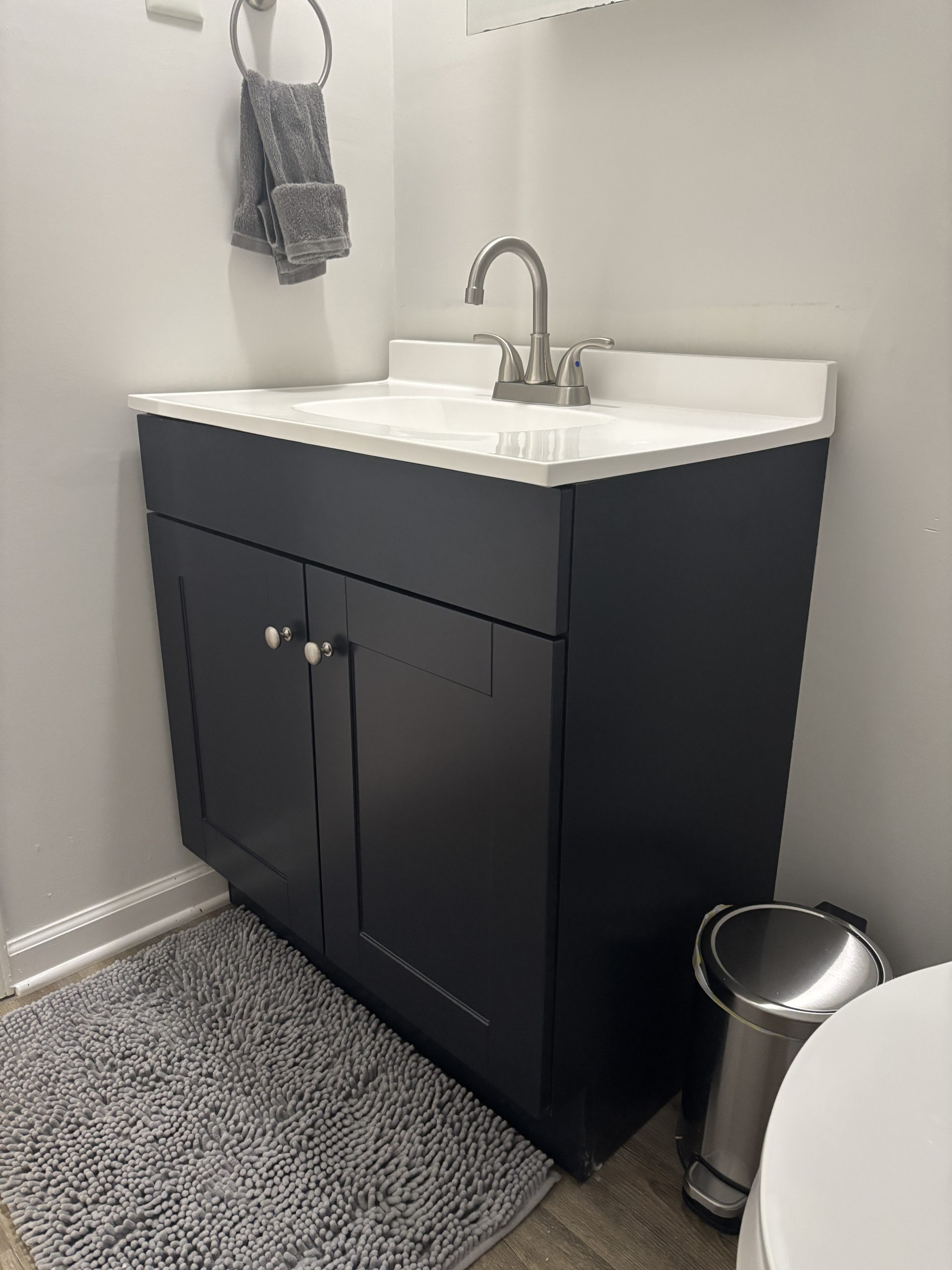
Bathroom paint peeling ranks among the most frustrating maintenance problems Lake Norman homeowners face because it feels like it shouldn’t happen. You chose a reasonable paint, the application looked fine, and within a year or two the ceiling above the shower started lifting in translucent sheets while corners developed soft, wrinkled patches that pull away when touched. The temptation is to scrape the loose areas, slap on fresh paint, and move on — but that quick fix is almost guaranteed to fail within the same timeframe because it addresses the symptom without solving the underlying failure chain. Bathroom peeling is rarely caused by a single factor. It’s the end result of a sequence of conditions — inadequate surface preparation, wrong product selection, poor ventilation, or moisture trapped within the wall system — that compound over time until the paint film simply can no longer maintain its grip. Understanding that failure chain before you repaint is the difference between a fix that holds for a decade and one that sends you back to the paint store next year.
The Adhesion Chain: Why Bathroom Paint Lets Go
Every paint failure begins as an adhesion failure, and adhesion in bathrooms depends on a chain of bonds only as strong as its weakest link. The finish paint bonds to the primer. The primer bonds to the substrate. The substrate bonds to the framing behind it. Moisture attacks every link simultaneously and destroys whichever was weakest first. If the primer was basic PVA that softens when saturated, the primer-to-substrate bond fails and the system slides off in sheets with primer still attached to the peeling paint’s backside. If no primer was used — more common than you’d expect, since many homeowners assume paint-and-primer-in-one eliminates the priming step — the finish coat bonds directly to the old surface without the mechanical and chemical grip to survive sustained moisture cycling. If the substrate itself has been compromised by years of repeated exposure, even perfect primer and paint can’t maintain adhesion to drywall paper facing that has softened and lost structural integrity. Identifying which link failed tells you exactly where the fix needs to focus.
How Lake Norman’s Climate Compounds Bathroom Moisture Problems
The Lake Norman corridor sits in North Carolina’s piedmont region where summer humidity routinely holds above seventy-five percent from May through September, and even winter months average fifty to sixty percent — substantially more ambient moisture than homeowners in the mountain or coastal plain regions experience at the same latitude. This sustained humidity means the air entering your bathroom through door gaps and HVAC circulation is already heavily moisture-loaded before anyone turns on the shower. In drier climates, post-shower bathroom humidity drops rapidly as dry house air replaces the steam. In Mooresville, Cornelius, Davidson, and the surrounding Lake Norman communities, that recovery is sluggish because the replacement air itself carries significant moisture. Your bathroom paint film spends substantially more hours per day in a moisture-stressed state than identical products in drier regions, accelerating every failure mechanism — adhesion softening, mildew colonization, and substrate degradation — on a compressed timeline. Bathrooms in lakefront and waterfront homes face an additional variable: proximity to Lake Norman’s surface creates localized humidity that can push ambient levels even higher than inland properties experience, particularly during warm evenings when the lake releases stored heat and moisture into surrounding air.
The Compounding Repaint Cycle Most Homeowners Don’t Recognize
Here is where bathroom peeling becomes a progressively worsening problem rather than a static one. Each time a homeowner repaints over a peeling bathroom without fully addressing the failed coating and the moisture conditions that caused it, the wall system accumulates additional layers of compromised material. Scraping the obvious loose sections and painting over the rest leaves behind areas where adhesion has partially failed but hasn’t yet visibly separated — paint that looks bonded but has already lost significant grip strength. The new coat bonds to this weakened surface and inherits its compromised adhesion. Within another cycle or two, the new paint peels in larger sections because the failure plane now extends beyond the original damaged area. We see Lake Norman bathrooms where three or four layers of this patch-and-repaint approach have created a thick, laminated film stack that peels away from the wall in rigid, multi-layer sheets — each layer representing a previous homeowner’s attempt to fix the problem without addressing the root cause. Breaking this cycle requires stripping back to a sound substrate and rebuilding the coating system from scratch.
Ventilation: The Factor That Determines Everything Else
The single highest-impact variable in bathroom paint longevity isn’t the product on the walls — it’s whether moisture actually leaves the room after each shower. A properly functioning exhaust fan rated for your bathroom’s cubic footage, ducted to the building exterior, and run for a full fifteen to twenty minutes after every shower can cut moisture-contact time on painted surfaces by more than half. But exhaust fan problems are endemic in Lake Norman area homes. Builder-grade fans installed during the construction boom across Mooresville, Denver, Sherrills Ford, and Huntersville often carry CFM ratings below what the bathroom square footage demands. Ductwork that terminates in the attic rather than at the roof or soffit — a code violation that nonetheless persists in homes from every era — dumps moisture-laden air into the attic space where it condenses on roof sheathing, promotes mold growth, and sometimes migrates back through the ceiling into the very bathroom it was supposed to leave. Flex duct runs with excessive bends, sags, or lengths beyond the fan’s rated capacity restrict airflow enough to reduce effective CFM well below the fan’s nameplate specification. Before you repaint a peeling bathroom, verify that your ventilation actually works — hold a single tissue against the exhaust fan grille with the fan running and the bathroom door closed. If the tissue doesn’t stick firmly, your exhaust system isn’t moving enough air to protect your paint investment regardless of what product you apply.
The Correct Repair Sequence Before New Paint Goes On
Fixing a peeling bathroom requires a specific order of operations addressing the full failure chain. Begin by removing every section of compromised paint — not just visible lifts, but every area where adhesion has weakened. Test by pressing painter’s tape firmly onto the wall and pulling sharply — any paint that lifts has lost its grip and must be scraped. Once you’ve reached sound substrate or firmly bonded paint, inspect exposed drywall for moisture damage. Paper facing that feels soft or separates from the gypsum core can no longer support adhesion and must be skim-coated with setting-type compound or replaced. Sand all transitions between scraped and sound areas to feather edges that won’t telegraph ridges through the new finish. Clean the entire surface to remove mildew, soap residue, or mineral deposits.
Primer and Product Selection for Lake Norman Bathrooms
Apply a dedicated moisture-sealing acrylic primer — not PVA, not paint-and-primer-in-one — to all bare areas and ideally the entire ceiling and wall surfaces within the wet zone. This primer creates a moisture-resistant foundation that protects the bond between the substrate and the finish coats above it. For finish coats, select a premium bathroom-specific formulation containing one hundred percent acrylic binder, factory-incorporated mildewcide, and a satin or semi-gloss sheen that creates a denser, more moisture-resistant film than flat or eggshell. The mildewcide component matters significantly in Lake Norman’s sustained humidity because mildew organisms don’t just discolor paint surfaces — their root structures physically penetrate the film and break down the polymer binder from within, creating adhesion failure points that expand over each humidity cycle. Allow a full seventy-two hours of cure time before returning the bathroom to normal use. Showering before the paint has fully cross-linked exposes the still-vulnerable film to the exact moisture assault it’s least prepared to handle, potentially undoing the entire repair within the first week.
Stop the Cycle and Get It Done Right
Bathroom peeling doesn’t fix itself, and each patch-and-repaint shortcut makes the next failure worse. The homeowners who get lasting results commit to addressing the full failure chain — ventilation verification, complete removal of compromised coating, substrate repair, proper priming, and product selection matched to the moisture reality of their specific bathroom.
At Trailblaze Painting, we approach every bathroom project with that full-system mindset. We evaluate your ventilation, strip compromised coatings to sound substrate, repair moisture-damaged drywall, and build a primer-and-paint system designed to hold up through years of daily steam exposure in our piedmont humidity. We serve homeowners across Mooresville, Cornelius, Davidson, Huntersville, Denver, Sherrills Ford, and the entire Lake Norman area with the preparation discipline and product knowledge that breaks the bathroom repaint cycle permanently. Call us today for your free estimate — and let us give your bathroom a finish that’s still holding strong when you’ve forgotten you ever had a peeling problem.