Deck Stain vs. Deck Paint in the Lake Norman Climate: Which Lasts Longer and Looks Better on Your Wood
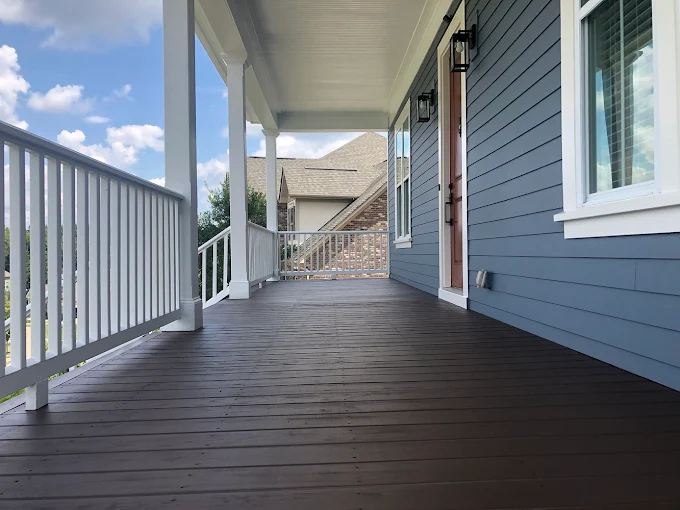
The decision between staining and painting your deck sounds simple until you start researching it, and then you discover that the answer depends on variables most homeowners have never considered — the species and condition of your wood, how much direct sun your deck receives, whether your boards are pressure-treated or naturally rot-resistant, and critically, the specific climate your deck endures. In the Lake Norman area, that climate creates a combination of challenges that makes this decision more consequential than it would be in drier regions. Mooresville, Cornelius, Davidson, and surrounding communities sit in a humid subtropical zone delivering intense summer UV, sustained humidity above seventy percent for months, roughly forty-seven inches of annual rainfall, and enough seasonal temperature variation to create meaningful wood expansion and contraction. Every one of those factors interacts differently with stain than with paint, and choosing wrong means watching your investment deteriorate years early.
How stain and paint work differently on wood
The fundamental difference between stain and paint isn’t just appearance — it’s how each interacts with wood at a structural level. Stain penetrates into wood fibers, depositing pigment and protective resins within the cellular structure rather than sitting on top. Paint forms a film on the wood surface, bonding to the outermost fibers and creating a continuous coating that seals the wood from moisture, UV, and physical wear. This film-forming behavior gives paint its ability to completely change wood’s appearance, hiding grain, knots, and imperfections beneath an opaque barrier. Both approaches protect wood, but through fundamentally different mechanisms — and those mechanisms respond very differently to the stresses Lake Norman’s climate imposes on outdoor wood.
Why Lake Norman’s Climate Punishes Deck Paint Harder Than Most Homeowners Expect
Paint’s film-forming nature creates its greatest vulnerability in our climate: moisture trapping. When paint seals the top surface of your deck boards, it prevents moisture from entering through the top — but deck boards absorb moisture from all sides, including the underside and end grain that paint doesn’t typically cover. In Lake Norman’s sustained humidity, your deck boards are constantly absorbing ambient moisture through these uncoated surfaces. That moisture migrates through the wood and pushes against the paint film from below, generating hydraulic pressure at the paint-wood interface. Over repeated humidity cycles, this pressure weakens the adhesive bond and eventually causes the paint to lift, bubble, and peel. The problem is compounded by our temperature swings — summer surface temperatures on a sun-exposed painted deck in Mooresville can exceed one hundred and forty degrees, while winter nights drop below freezing. Each thermal cycle causes the wood to expand and contract at a different rate than the rigid paint film above it, creating mechanical stress that accelerates the cracking and peeling that moisture pressure initiated. This is why deck paint in the Lake Norman area frequently shows visible peeling within two to three years on horizontal surfaces, even when the same product performs acceptably for twice that duration on vertical surfaces like siding where water drainage and reduced moisture absorption work in paint’s favor.
Where Stain Outperforms Paint
Stain’s penetrating nature gives it an inherent advantage on horizontal deck surfaces because it doesn’t create the sealed film that traps moisture. Water can enter and exit the wood relatively freely through a stained surface, meaning the hydraulic pressure cycle that destroys paint films simply doesn’t develop. When humidity rises and your boards absorb moisture, it evaporates back through the stain rather than being trapped beneath an impermeable barrier. This breathability is why semi-transparent stain on a Lake Norman deck typically maintains its appearance for three to four years before recoating, and when it does wear, it fades gradually rather than peeling in unsightly sheets. The maintenance cycle is also fundamentally easier. Recoating a stained deck requires cleaning, light sanding, and applying fresh stain over existing coating. Recoating a peeling painted deck requires scraping every loose section to bare wood, feathering edges, priming, and then repainting — a process three to four times longer and significantly more expensive.
When Paint Actually Makes Sense
Despite stain’s advantages, paint is the better choice in specific circumstances. If your deck boards are older and showing surface damage — splintering, checking, gray discoloration, or stain that no longer absorbs evenly — paint’s film-forming nature becomes an asset. The opaque coating hides accumulated damage that stain would highlight, giving worn boards a fresh visual surface without replacement. Pressure-treated lumber in service for several years often reaches a condition where stain no longer penetrates uniformly, creating blotchy, uneven appearance that paint solves with a uniform finish. Composite and PVC decking — increasingly common in newer Lake Norman developments around Denver, Sherrills Ford, and Westport — generally cannot be stained because they lack porous wood fiber structure. If you want to change composite decking color, specialty deck paint is your only option.
Understanding the Stain Spectrum: Transparent, Semi-Transparent, and Solid
Not all stains perform identically, and the type you choose dramatically affects longevity in our climate. Transparent stains offer maximum grain visibility but contain the least pigment, providing the least UV protection. In Lake Norman’s intense sun, transparent stains on exposed surfaces may fade to near-invisibility within twelve to eighteen months. Semi-transparent stains represent the performance sweet spot — enough pigment for meaningful UV blocking and three-to-four-year color retention while still showing wood grain character. The pigment particles within wood fibers act as miniature UV shields, slowing photodegradation of both the stain and the wood’s natural lignin. Solid-color stains occupy a middle ground between stain and paint — pigment concentrations approaching paint levels that can obscure grain almost completely, but achieved with a thinner, more flexible, somewhat more breathable film. Solid stain offers a reasonable compromise for homeowners wanting color coverage without paint’s moisture-trapping drawbacks, though it can still peel on horizontal surfaces if applied too thickly or over inadequately prepared wood.
The Preparation Factor That Determines Everything
Regardless of whether you choose stain or paint, surface preparation most dramatically affects how long your coating lasts. Wood carrying mill glaze — the burnished surface created during lumber processing — rejects both stain penetration and paint adhesion. Previously coated decks carry residual product that must be addressed: old stain can often be cleaned and lightly sanded to accept fresh stain, but failing paint must be removed completely from every area showing adhesion loss. The most commonly skipped step in our area is allowing adequate drying time after cleaning. Pressure washing a Lake Norman deck in July creates a surface that looks dry within hours but retains internal moisture well above the fifteen percent threshold both stain and paint require. In our humidity, freshly washed boards may need three to five dry days to reach appropriate moisture levels — a waiting period that impatient homeowners and rushed contractors frequently shortcut, guaranteeing premature failure.
Oil-Based vs. Water-Based: The Lake Norman Performance Reality
The oil-based versus water-based debate adds another layer to stain selection. Oil-based stains penetrate deeper and provide superior water repellency, making them historically preferred for demanding exterior wood. However, modern water-based acrylic formulations have closed much of this gap while offering faster drying, easier cleanup, lower VOC emissions, and better UV resistance. In Lake Norman’s humidity, water-based stains offer a practical application advantage: they tolerate slightly higher ambient humidity during drying without developing the tackiness and incomplete curing that oil-based products exhibit when humidity exceeds seventy percent during their longer flash-off period. Given that finding days below seventy percent humidity during peak deck season here is genuinely difficult, this advantage translates into more consistent results.
Making the Right Choice for Your Deck
The right answer for your specific deck depends on the intersection of your wood’s current condition, your tolerance for maintenance frequency, and your aesthetic priorities. New or well-maintained pressure-treated pine — the most common decking material across Mooresville, Cornelius, Davidson, and Huntersville — performs best with semi-transparent stain that protects the wood while allowing it to breathe through Lake Norman’s humidity cycles. Older decks with accumulated surface wear benefit from solid stain or paint that conceals damage while providing a renewed appearance. And every deck, regardless of product choice, demands thorough preparation and appropriate drying time to give the coating its best chance at a full service life in our demanding climate.
At Trailblaze Painting, we evaluate every Lake Norman deck individually — assessing wood species, current condition, sun exposure, moisture levels, and your goals for appearance and maintenance — before recommending the product system that will perform best for your specific situation. We don’t default to one answer for every deck because every deck in our area faces a different combination of the challenges that determine coating longevity. Call Trailblaze Painting today and let us help you make the deck coating decision you’ll still be happy with years from now.